
Banks County Civil Docket Searches
First figure out which court holds the file: Superior, Magistrate, or Probate. The Georgia E-Access directory routes Banks Superior cases to a provider that requires an account. The directory itself lets you pick the court. It does not spell out every search field, document fee, or year of coverage. PeachCourt also appears there for mandatory Superior civil e-filing. But filing access and public document viewing are two different tasks. Banks Magistrate offers no anonymous civil database. For that docket, call the Magistrate clerk at 706-677-6270 or visit the Suite 10 counter. For Superior civil records, use E-Access. Phone the Clerk of Superior Court at 706-677-6240 whenever the provider comes up short. Probate Court keeps estates and guardianships separate, in a system of its own.
- Identify the filing court from the complaint, summons, or notice.
- Collect the full case number, party or caption, approximate year, and case type.
- Select Banks Superior in E-Access only for a Superior matter.
- Read service, response, motions, signed orders, and current settings in sequence.
- Request the filed judgment from the correct clerk when an official result is needed.
Note: A Superior Court provider search can still come up empty when the file sits elsewhere. Magistrate, Probate, archived, sealed, and non-imaged civil cases in Banks County will not appear there.
Banks Magistrate $15,000 Divide
Money shapes the route a lawsuit takes in Banks County. Civil claims of $15,000 or less go to Magistrate Court. The county's jurisdiction summary says so. That office also hears dispossessory actions, garnishments, and other enforcement work. Superior Court takes the bigger and messier matters. Those run from real-property title and equity to domestic relations. The amount matters most. But the remedy and the subject can shift jurisdiction too.
Probate estates and guardianships can look like civil cases. They don't live in either search. Neither the Superior docket search nor the Magistrate one holds them. Before hunting a party name, check which court is printed on the filing. That heading often explains why a Banks County civil docket seems to be missing.
Quick answer: A claim at or below the published Magistrate limit often starts in Suite 10. Major civil and exclusive-jurisdiction matters go to Superior Court.
Civil Dockets: What They Show
A Banks County civil docket works as a running index of a lawsuit. Each line records a filing, a hearing, or an order. Think of it as a timeline, not a narrative. The entries list dates and short labels, so a reader follows a case from its first filing to its end. A docket label alone can be thin. One motion entry is just a request. It does not tell you how the judge ruled.
| Case header | Number, filing date, court, judge, case type, and status. |
|---|---|
| Parties | Plaintiff or petitioner, defendant or respondent, and attorneys where public. |
| Service | Summons and return events showing formal notice activity. |
| Filings | Complaint, petition, answer, motions, and other indexed documents. |
| Settings | Hearing dates, notices, resets, and calendar entries. |
| Outcome | Judgment, dismissal, transfer, appeal, or enforcement events. |
The docket rarely holds evidence or the court's reasoning. Those live in the documents themselves. Ask the clerk for a copy, or open a linked file if you have authorized access. When a signed order and a short docket label disagree, the order controls.
Service, Answers, Motions, Orders
Reading a Banks County civil docket works best in order. A complaint or petition opens the case. Then comes service, which is the formal handoff of court papers to the other side. The responding party files an answer after that. Watch one trap here. If no answer shows up, the docket may lean toward a default posture. That missing line by itself does not prove a default judgment was entered.
From there, pair every motion with its signed order. The motion entry is only a request. The order tells you the result. Reading one without the other is how people get misled. Discovery can look sparse on the docket because many exchanges never get filed at all. Hearing notices and calendar entries follow. The timeline then ends with trial, a dispositive ruling, a settlement dismissal, voluntary dismissal, or judgment.
- Service
- Formal delivery of court process to give notice.
- Default judgment
- A judgment entered after required response and procedural conditions are met.
- Nonsuit
- A voluntary end to a claim in the circumstances allowed by law.
- FiFa
- A fieri facias execution record used to enforce a money judgment.
- Garnishment
- A post-judgment process directed to assets held by another person or entity.
What Cases Fill the Civil Docket
Civil cases in Banks County split across three courts. Superior Court handles the big ones. Its civil docket covers contract fights, tort claims, real-property disputes, equity matters, and domestic-relations cases, plus other general-jurisdiction filings. Magistrate dockets stay smaller and faster. They cover small claims within the published limit, dispossessory proceedings, garnishments, foreclosure-related filings, interrogatories, and FiFa work. Probate keeps estates and guardianships on its own separate track.
| Matter | Likely Banks court | Record focus |
|---|---|---|
| Large or complex civil claim | Superior | Complaint, motions, orders, judgment |
| Real-property title or equity | Superior | Petition, hearing, final order |
| Claim through $15,000 | Magistrate | Claim, service, response, judgment |
| Dispossessory or garnishment | Magistrate | Statutory filing and enforcement events |
| Estate or guardianship | Probate | Petition, notice, orders |
A case label alone does not settle jurisdiction, since small details can push a filing one way or the other, and court staff can confirm procedure but cannot give legal advice.
PeachCourt and Banks Civil Filing
The official Georgia e-file directory lists PeachCourt as mandatory for Banks Superior civil e-filing. That settles where an eligible document goes. Attorneys and filers can rely on it. Two cautions apply. The listing does not promise free public access to every filed image. Nor does it fold Magistrate or Probate records into one combined county database. Even so, the directory is solid proof of the Banks County filing route.
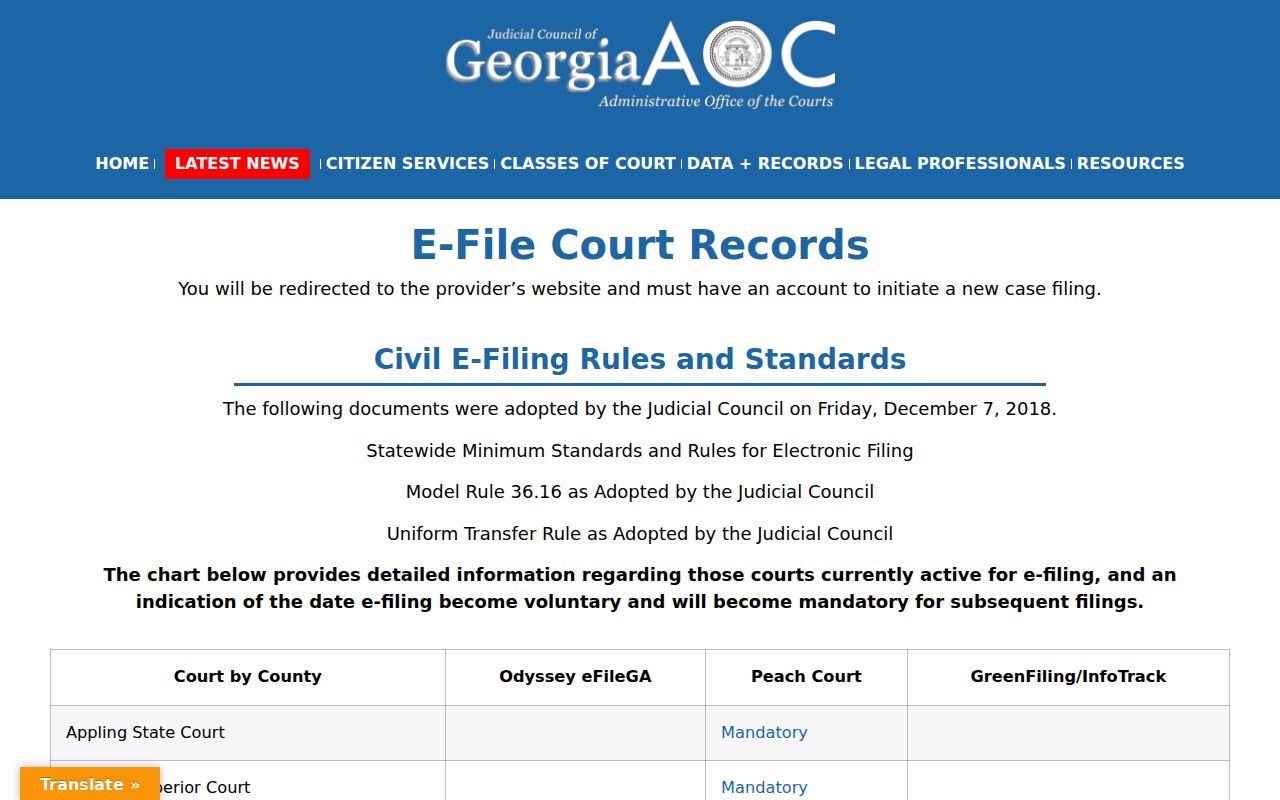
For Superior case information, the E-Access route is the public reader's tool. PeachCourt does not show every document, though. When the provider leaves something out, ask the Banks County clerk for it directly. Filers face their own duties on the e-filing side, and redaction rules are among them.
Some older Banks civil files are paper only or were never imaged. They can fall outside provider coverage. Give the clerk the case number, caption, and year. Then name the exact document or the event you want to see. Ask about the fee first. Find out how the copy will be delivered before you send any money.
Hearings on the Civil Docket
A civil setting can take many forms. It might be a status conference, a motion hearing, or a calendar call. It could also be a bench trial, a jury trial, or some other event the court names. Never assume a listed date is the final trial. Read the setting type first. Then scan later docket entries for a continuance, reset, cancellation, or replacement notice.
Scheduling orders add another wrinkle. They can set deadlines that never look like a courtroom hearing at all. Read the docket beside the filed notice or order. If two dates conflict, call the assigned court instead of trusting whichever screen looks newest.
The clerk can confirm what the docket records, but the judge's office controls courtroom instructions.
Transfers and appeals create a final trap. The originating docket may show the transfer or the notice of appeal, yet the case keeps moving in the receiving court. Follow that court and any new case identifier it assigns.
Banks Civil Fees and FiFa
The Banks Magistrate Court source publishes its office details and a fee notice.
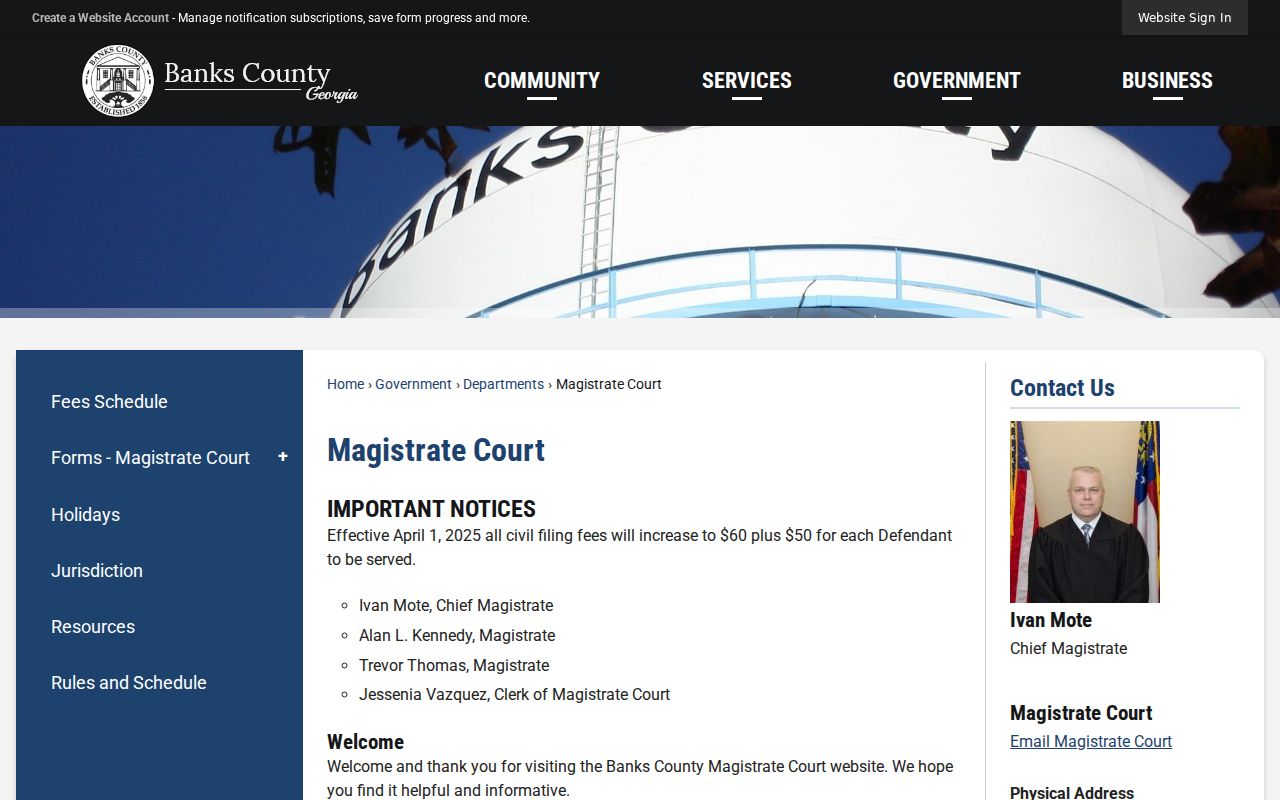
Fees for a Banks County civil case start with a $60 filing fee. Service adds $50 for each defendant. That is the April 1, 2025 notice. The itemized schedule lists $110 with service for one defendant, which is the same total stated a second way. Confirm the current amount before you file, since the count of defendants changes the bill.
A judgment rarely closes out the docket. Look for FiFa entries, garnishments, or interrogatories afterward. Those are the tools a creditor uses to collect. A satisfaction, appeal, transfer, or enforcement order can reshape what the case means today. The official Magistrate fee schedule breaks down each filing and copy charge.
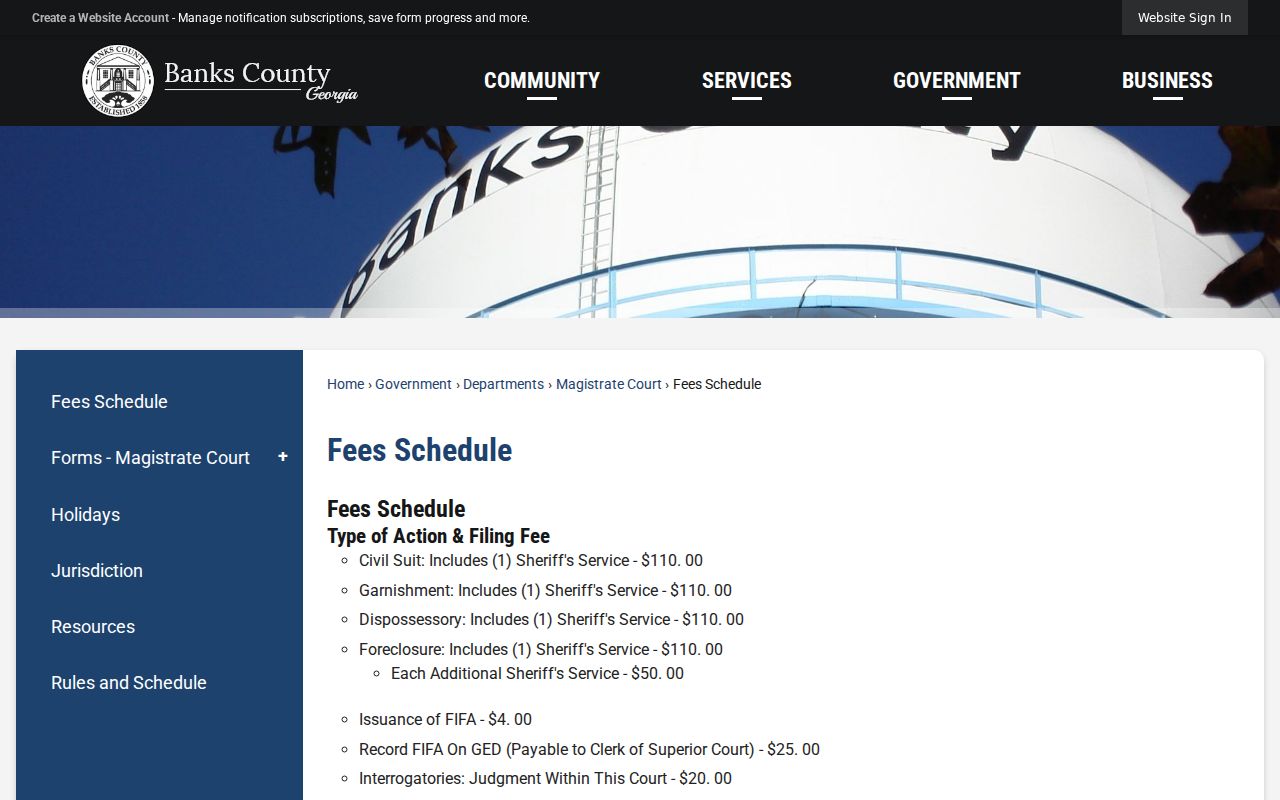
Those prices belong to Magistrate Court alone. Superior Court and Probate copy costs are separate, so ask each clerk before you order.
Who Can See Civil Dockets
Most ordinary civil dockets are public. The Georgia Open Records Act resources back that with a broad right of access, though judicial rules and each clerk's own process still govern what you can pull. Two rules matter here. O.C.G.A. §9-11-7.1 shields certain identifiers in filings, and Uniform Superior Court Rule 21.6 covers redacted public versions plus requests to seal.
Domestic, adoption, juvenile, and guardianship cases face tighter limits. Redaction can hide one identifier while the rest of the case stays open, and a sealed filing can vanish even though the case header remains public. A missing record on a commercial site is not proof of sealing either. Coverage gaps and login walls cause omissions too.
Access rule: Ask the custodian for the legal basis of a denial and whether a public redacted version can be produced. Do not ask staff to reveal protected content.
Electronic filing changes none of these duties. Filers must still redact, and anyone requesting records should leave sensitive identifiers out of the request itself.
Banks Signed Civil Judgments
A docket line is only a signal that the court acted. The signed judgment holds the real terms. The two are not interchangeable. Default judgment, judgment for a plaintiff or defendant, consent judgment, settlement dismissal, voluntary dismissal, transfer, and appeal all appear on a Banks County court docket, and each carries a distinct meaning.
Ask the clerk who holds the case. That office can pull the actual document. Superior Court lists 706-677-6240 with a counter in Suite 8. Magistrate records sit in Suite 10 at 706-677-6270. Provide the full case number, caption, filing year, document title, and date. Say whether you want a plain or certified copy. Then get the current fee and delivery terms.
A provider printout does not arrive certified on its own. Look for the clerk's attestation when the copy lands. If the docket shows enforcement after judgment, order the later FiFa, garnishment, satisfaction, or appeal paper as well. The full picture depends on it.